

Planning for After Life · Guide
How to Write a Will in Illinois
A will says who receives your property, who carries out your wishes, and who would raise your children. This guide explains how to write a will in Illinois: what the law requires, what a will should say, and the steps in order. It also shows where the choices get hard, which is where an attorney helps.
The Short Answer
To make a valid will in Illinois, you must be at least 18 and of sound mind, put the will in writing, sign it, and have two credible witnesses sign in your presence. How to make a will in Illinois comes down to five steps: decide what you want, put it in writing, sign it with the right witnesses, keep it safe, and update it as your life changes.
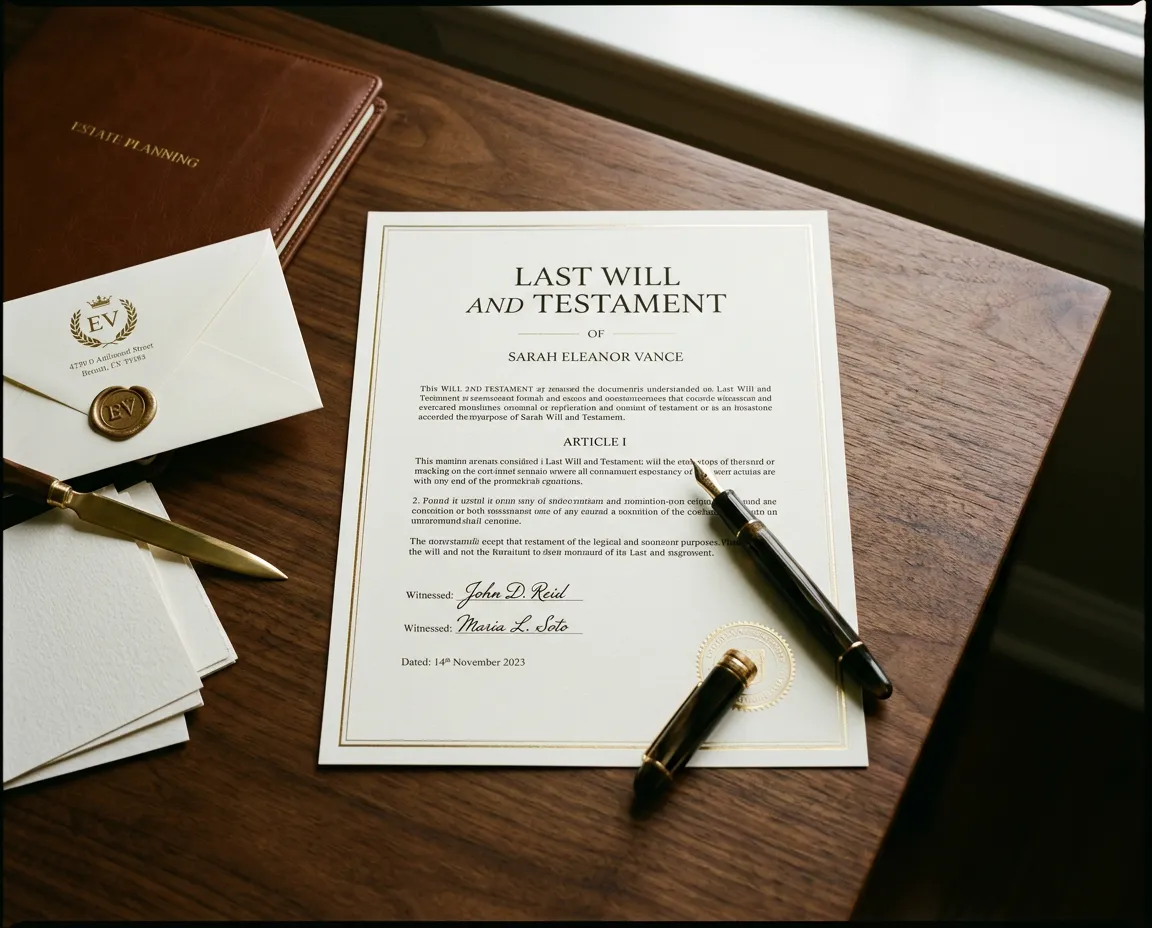
Illinois Will Requirements
You must be at least 18 and of sound mind and memory. You need to understand what you own, who your family is, and what you are signing.
The will must be in writing. Illinois does not accept a spoken will. In practice, a will is typed or printed so it is clear and easy to read.
You must sign it. You can also direct someone else to sign for you, in your presence.
Two credible witnesses must watch you sign, and sign in your presence. A handwritten will with no witnesses is not valid in Illinois.
A notary is not required. Notarizing is optional. Witness language in the will, or a signed statement from the witnesses, can make it easier to prove later.
Choose witnesses who receive nothing. A witness who is also a beneficiary can lose the gift unless two other witnesses sign. Pick two people with no stake in the will.
What Goes in a Last Will and Testament in Illinois
A last will and testament in Illinois usually includes:
Your name and where you live.
A statement that cancels earlier wills, so there is no doubt which one controls.
Your executor and a backup. The person who carries out your wishes and handles your estate through the court.
Who receives your property. Specific gifts, such as a home or a family heirloom, and who receives the rest.
Guardians for your children, if they are under 18. Our page on naming a guardian for your children explains how this works.
Instructions for a trust, if you have one. A pour-over will sends anything left outside the trust into it, and our trust attorney in Chicago page explains how a trust works.
The signing and witness language, which shows the will was signed correctly.
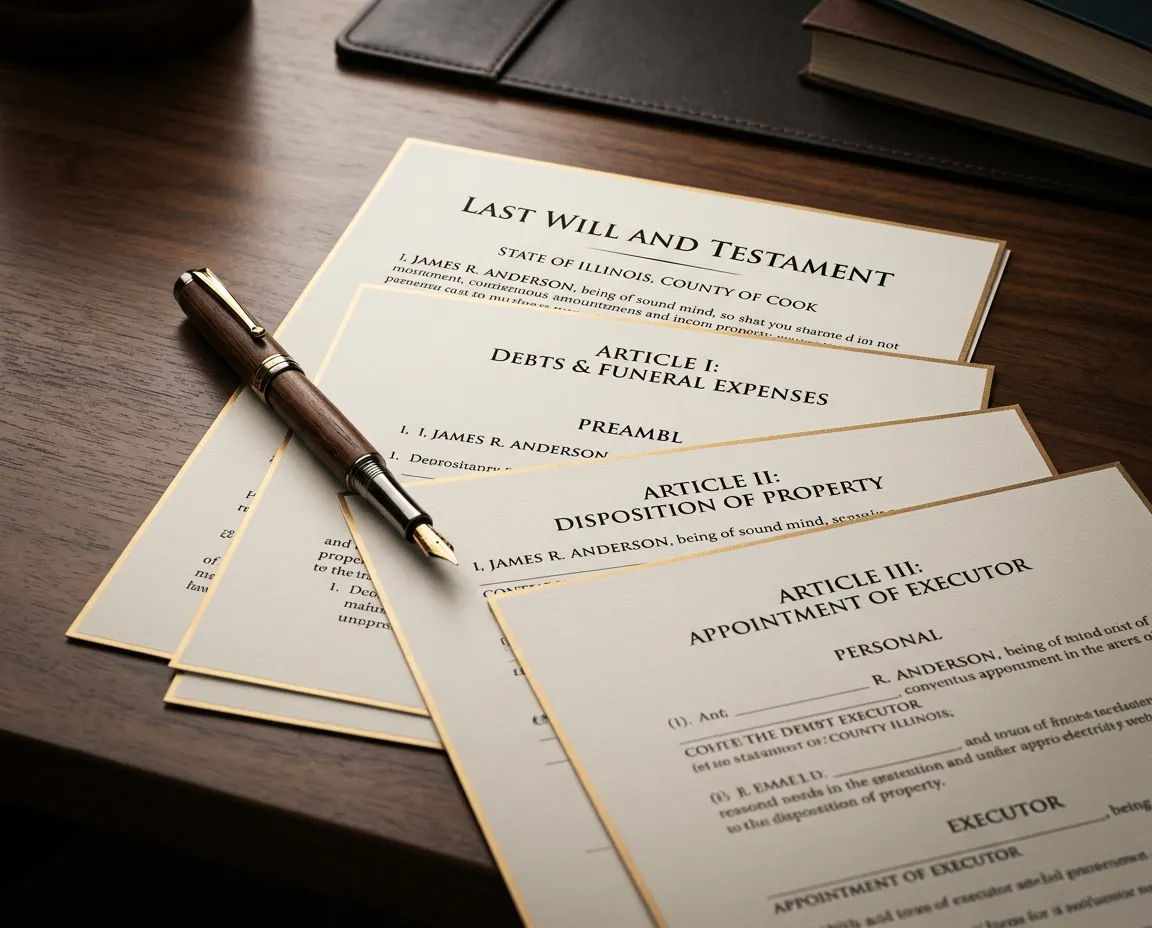
How to Write a Will in Illinois, Step by Step
Here is how to write a will in Illinois, in order.
01
Take stock
List what you own and who matters to you. Note which accounts have a named beneficiary, because those pass outside your will.
02
Choose your executor and a backup
Pick someone organized, trustworthy, and willing, and ask them first.
03
Decide who receives what
Name backups in case someone you chose dies before you, and decide who receives whatever is left over.
04
Name guardians if you have young children
Choose a guardian and a backup, and decide who will manage money left to your children.
05
Put it in writing, clearly
Plain wording matters. Unclear wording can cause confusion about what you meant.
06
Sign it in front of two witnesses
They watch you sign, and then they sign in your presence.
07
Store the original safely and tell your executor where it is
After you die, the person holding the original must file it with the court.
08
Review it as life changes
A marriage, a divorce, a new child, or a move are all reasons to look at it again.
Common Mistakes When Writing a Will
Using a beneficiary as a witness
It can cost them their gift.
Writing changes on the signed original
Crossing out or writing in a change generally does not work. A change needs a new will or a codicil, signed and witnessed the same way.
Not naming a backup executor or backup beneficiaries
If the first person can’t serve, the court decides.
Forgetting what a will doesn’t control
Retirement accounts, life insurance, and jointly owned property pass by their own rules.
Never updating it
A will that no longer matches your life can leave the wrong person in charge.
Where an Attorney Helps
A will touches a lot more than the document itself: how your beneficiary designations line up, how your home is titled, whether a trust fits better, and who would raise your children. An attorney makes sure the pieces work together and that the will is signed correctly. Our will lawyer in Chicago page explains how we prepare wills.
Will-based planning starts at $2,000 with our Life Plan, and your attorney confirms what your plan includes and your price before any work begins. This work is part of what we do as an estate planning attorney in Chicago.
Questions About Writing
a Will in Illinois
Can I change my will after I sign it?
Yes, you can change or replace your will at any time while you have capacity. You do it with a new will or a codicil, signed and witnessed the same way as the original. Crossing out or writing in changes on the original generally doesn’t work.
Who should I name as executor of my will?
Choose someone you trust who is organized, willing, and able to handle paperwork and deadlines, and ideally someone who lives nearby. Name a backup in case your first choice can’t serve. A bond may be required unless your will excuses it.
Where should I keep my signed will?
Keep the original somewhere safe and dry, and make sure your executor knows where it is. Don’t staple or mark the original. After you die, the person holding it has to file it with the court.
Do my witnesses need to read my will?
No. Your witnesses only need to watch you sign and then sign in your presence. They do not need to read the will or know what it says, so your choices stay private.
Talk It Through
One conversation can turn your choices into a will that is signed correctly and works with the rest of your plan.
Attorney advertising. The information on this website is general information, not legal advice. Contacting the firm does not create an attorney-client relationship.
Chicago Office
© 2026 The Higher Law Firm. All rights reserved.